Key Takeaways
- Balcony tile leaks are most commonly caused by failed grout, cracked tiles, or compromised membranes
- Epoxy regrouting can seal balcony tiles without removing them in many cases
- Untreated balcony leaks cause concrete spalling and structural damage to the building below
- Professional balcony leak repairs in Sydney typically cost $1,500–$5,000 depending on severity
Why Leaking Balcony Tiles Demand Urgent Attention
A leaking balcony is far more than a cosmetic inconvenience — it's a ticking clock on potential structural damage to your property. When water penetrates through failed grout or cracked tiles on your balcony, it begins a process of deterioration that, if left unchecked, can lead to concrete degradation (spalling), corroded reinforcement, and costly structural remediation.
Across Sydney — from seaside apartments in Bondi and Coogee to suburban homes in Castle Hill and Blacktown — we regularly encounter balcony tile leaks that could have been resolved affordably if caught early, but have escalated into major repair projects due to delayed action.
In this guide, we walk you through how to identify leaking balcony tiles, understand the underlying causes, and choose the right repair approach to protect your property and your investment. Every week you delay addressing a balcony leak increases the risk of irreversible structural damage — damage that could have been prevented with timely professional intervention.
How to Identify Leaking Balcony Tiles
Detecting a balcony leak early can save thousands of dollars in repairs. Here are the telltale signs to watch for:
- Water stains on the ceiling below — the most obvious sign, often appearing as brown or yellow marks on the ceiling directly beneath the balcony
- Efflorescence — white, powdery salt deposits on the underside of the balcony slab, indicating water is migrating through the concrete
- Cracked or missing grout — visible gaps between tiles where water can enter freely
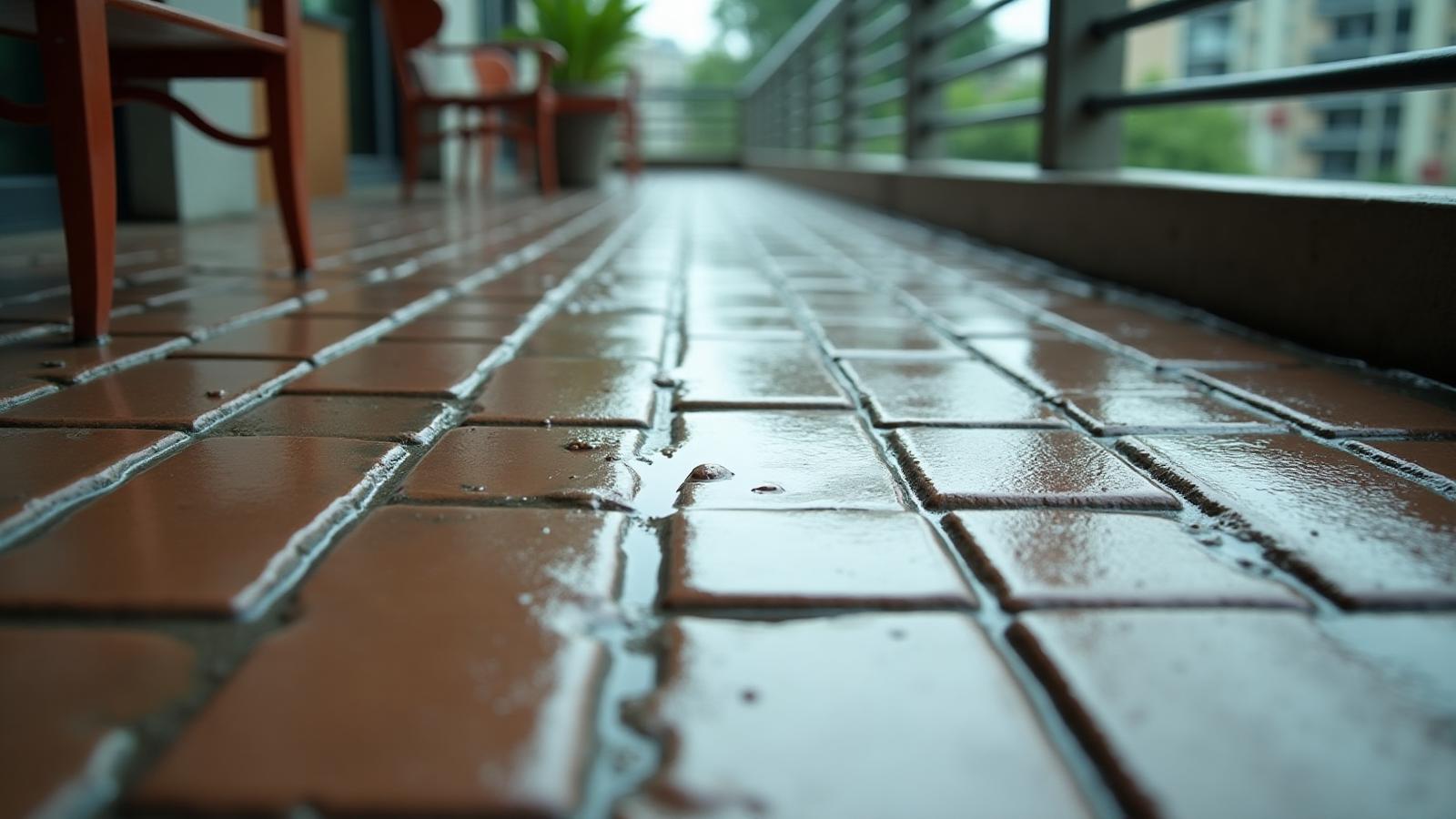
- Ponding water — water that remains on the surface after rain instead of draining away indicates fall or drainage issues
- Loose or hollow-sounding tiles — tap tiles firmly; a hollow sound indicates the adhesive bond has been compromised by moisture
- Rust stains — brown or orange marks on concrete surfaces indicate corroding steel reinforcement
- Mould or moss growth — persistent organic growth in grout lines suggests ongoing moisture problems
If you notice any of these signs, arrange a professional inspection promptly. Early detection dramatically reduces repair costs.
Common Causes of Balcony Tile Leaks
Understanding what causes your balcony to leak helps you make informed decisions about the repair approach:
Failed Waterproof Membrane
The waterproof membrane beneath your balcony tiles is the primary barrier preventing water from reaching the structural concrete. Membranes fail due to age (most have a 10–15 year lifespan), UV degradation, building movement, and poor original installation. Once the membrane is compromised, water penetrates directly into the concrete slab.
Grout Deterioration
External balcony grout endures far harsher conditions than internal grout — UV radiation, rain, temperature extremes, and physical wear. Traditional cement grout on balconies typically deteriorates within 5–8 years, creating pathways for water penetration. Read our comparison of epoxy grout vs cement grout to understand your options.
Inadequate Drainage
Balconies must have correct falls (minimum 1:60 gradient) directing water toward drainage outlets. If falls are insufficient or drains are blocked, water ponds on the surface, eventually finding its way through any weakness in the grout or membrane.
Structural Movement
Buildings naturally move due to thermal expansion, wind loading, and ground settlement. This movement creates stress on rigid tiled surfaces, causing cracks in tiles and grout that allow water entry. Proper movement joints and flexible sealants are essential to accommodate this movement.
The True Cost of Ignoring a Leaking Balcony
Many property owners underestimate how quickly a minor balcony leak can escalate into a major structural problem. Here's what happens when leaking balcony tiles are left unrepaired:
Stage 1 — Surface damage (months 1–6): Water penetrates through failed grout, causing staining on the ceiling below and early signs of efflorescence. Repair cost at this stage: $800–$2,000 for regrouting.
Stage 2 — Membrane degradation (months 6–18): Continuous water exposure accelerates membrane breakdown. Tiles begin to loosen as adhesive fails. Repair cost: $3,000–$5,000 for membrane repair and re-tiling.
Stage 3 — Concrete damage begins (years 1–3): Water reaches the steel reinforcement within the concrete slab. Corrosion begins, causing the steel to expand and the surrounding concrete to crack and flake — the beginning of concrete degradation (spalling). Repair cost: $5,000–$15,000+.
Stage 4 — Structural compromise (years 3–10): Extensive spalling compromises the structural integrity of the balcony slab. In severe cases, the balcony may become unsafe for use. Repair cost: $15,000–$50,000+ for structural remediation, or complete balcony reconstruction.
The message is clear: the earlier you act, the less you pay. A $1,000 repair today can prevent a $50,000 problem tomorrow.
Repair Options for Leaking Balcony Tiles
The right repair depends on the source and severity of the leak:
Option 1: Regrouting
If the leak is caused by failed grout and the membrane is still intact, regrouting with a flexible, waterproof grout system can resolve the problem without tile removal. This is the most affordable option, typically costing $800–$2,000.
Option 2: Topical Membrane Application
For balconies with minor membrane degradation, a liquid-applied waterproof membrane can be applied over existing tiles, creating a new waterproof layer. This is less disruptive than tile removal but is only suitable when the existing surface is in reasonable condition.
Option 3: Full Membrane Restoration
When the membrane has failed significantly, the most reliable repair involves removing tiles and screed, exposing the structural slab, repairing any concrete damage, applying a new multi-coat membrane system, and re-tiling. While more expensive ($3,000–$8,000), this approach addresses the root cause and provides 10–15 years of protection.
For all balcony leak repair options, we provide free inspections and transparent quotes. Our team services all Sydney suburbs including Chatswood, Hornsby, Liverpool, and Penrith.
How Sydney's Climate Accelerates Balcony Tile Leaks
Sydney's unique climate creates particularly challenging conditions for balcony waterproofing:
UV radiation: Sydney receives some of the highest UV levels in the world. Prolonged UV exposure degrades grout, sealants, and membrane materials, accelerating their deterioration far faster than in cooler, less sunny climates. Balconies facing north and west receive the most intense exposure.
Temperature extremes: Summer temperatures regularly exceed 35°C on exposed balcony surfaces (tile surfaces can reach 60°C+), while winter nights can drop below 5°C. This constant thermal cycling creates expansion and contraction stresses that crack rigid cement grout and stress tile adhesive bonds.
Coastal salt air: Properties within 5km of the coast — throughout suburbs like Cronulla, Manly, Bondi, and Dee Why — are exposed to salt-laden air that corrodes metal fixings and accelerates concrete carbonation, making steel reinforcement more vulnerable to corrosion.
Intense rainfall events: Sydney's increasingly intense storm events can deposit large volumes of water on balcony surfaces in short periods. If drainage is inadequate or grout has failed, this concentrated water load drives moisture deep into the structure.
Understanding these climate factors helps explain why balcony waterproofing maintenance is not optional in Sydney — it's essential.
Strata Considerations for Balcony Tile Repairs
If you live in a strata building, balcony tile repairs involve additional considerations:
Ownership and responsibility: Depending on your strata plan, balconies may be classified as common property (owners corporation responsibility) or part of your lot (individual owner responsibility). The classification determines who pays for repairs. Many Sydney strata plans classify the balcony slab as common property but the tiles and waterproofing as the lot owner's responsibility — though this varies.
Approval requirements: Most strata by-laws require written approval from the owners corporation before undertaking balcony repairs. This typically involves submitting a scope of works, obtaining committee approval, and potentially presenting at a general meeting for larger projects.
Neighbour impact: Balcony leaks in strata buildings almost always affect the unit below. Unresolved leaks can lead to disputes, mediation, and even NCAT (NSW Civil and Administrative Tribunal) proceedings. Addressing leaks promptly protects your relationship with neighbours and avoids costly legal processes.
Documentation: We provide comprehensive documentation for all strata balcony repairs, including inspection reports, specifications, compliance certificates, and warranties — everything your strata manager and committee need for proper record-keeping.
Prevention: Protecting Your Balcony from Future Leaks
Once repaired, ongoing maintenance extends the life of your balcony waterproofing:
- Clear drains and outlets regularly, especially before the wet season
- Inspect grout lines every 6 months for cracks or deterioration
- Remove organic debris that traps moisture against tile surfaces
- Check for ponding water after rain — it should drain within an hour
- Arrange a professional inspection every 3–5 years
- Apply tile sealer every 1–2 years to reduce surface water absorption
- Keep balcony furniture pads in good condition — worn pads can damage grout and tiles
For comprehensive leak prevention advice, read our complete guide to leak repairs in Sydney.
Choosing the Right Specialist for Balcony Tile Repairs
Not all tilers or waterproofers are experienced with balcony leak repairs. When choosing a specialist, look for:
- Specific balcony repair experience — general tilers may not understand waterproofing systems and leak diagnostics
- Diagnostic capability — the contractor should be able to identify the leak source, not just quote on tile replacement
- Knowledge of waterproofing standards — repairs should comply with professional standards for external waterproofing
- Written warranty — insist on a minimum 10-year warranty covering materials and workmanship
- Insurance — comprehensive public liability insurance is essential, especially for work at height
- Transparent quoting — a detailed, itemised quote should be provided after inspection, with no hidden costs
At Sydney Sealed, we specialise in balcony leak diagnosis and repair. Our free inspection identifies the exact leak source and the most cost-effective repair method for your situation. We service all Sydney suburbs and provide honest, no-obligation quotes.
People Also Ask
Peter Kim
Lead Technician — Leak Repair Specialist
Over 15 years of experience in shower and balcony waterproofing solutions across Greater Sydney.