Key Takeaways
- Liquid-applied membranes, sheet membranes, and cementitious coatings are the three main balcony waterproofing systems
- The best system depends on your balcony's substrate, exposure, and structural movement
- All balcony waterproofing systems require proper drainage falls of at least 1:100
- Professional installation with quality materials provides 15–25 years of waterproof protection
Why Balcony Waterproofing Matters in Sydney
Sydney's climate presents unique challenges for balcony waterproofing. Intense UV radiation, driving rain, coastal salt air, and temperature extremes from below 5°C in winter to above 40°C in summer create demanding conditions that test even the best waterproofing systems.
A properly specified and installed balcony waterproofing system protects your property from water infiltration, prevents concrete degradation and spalling, and maintains your building's structural integrity. For strata buildings, proper balcony waterproofing also prevents costly inter-lot disputes and protects common property.
Whether you own a harbourside apartment in Mosman, a townhouse in Epping, or a home in Baulkham Hills, understanding your waterproofing options helps you make informed decisions about protecting your property.
Liquid-Applied Membrane Systems
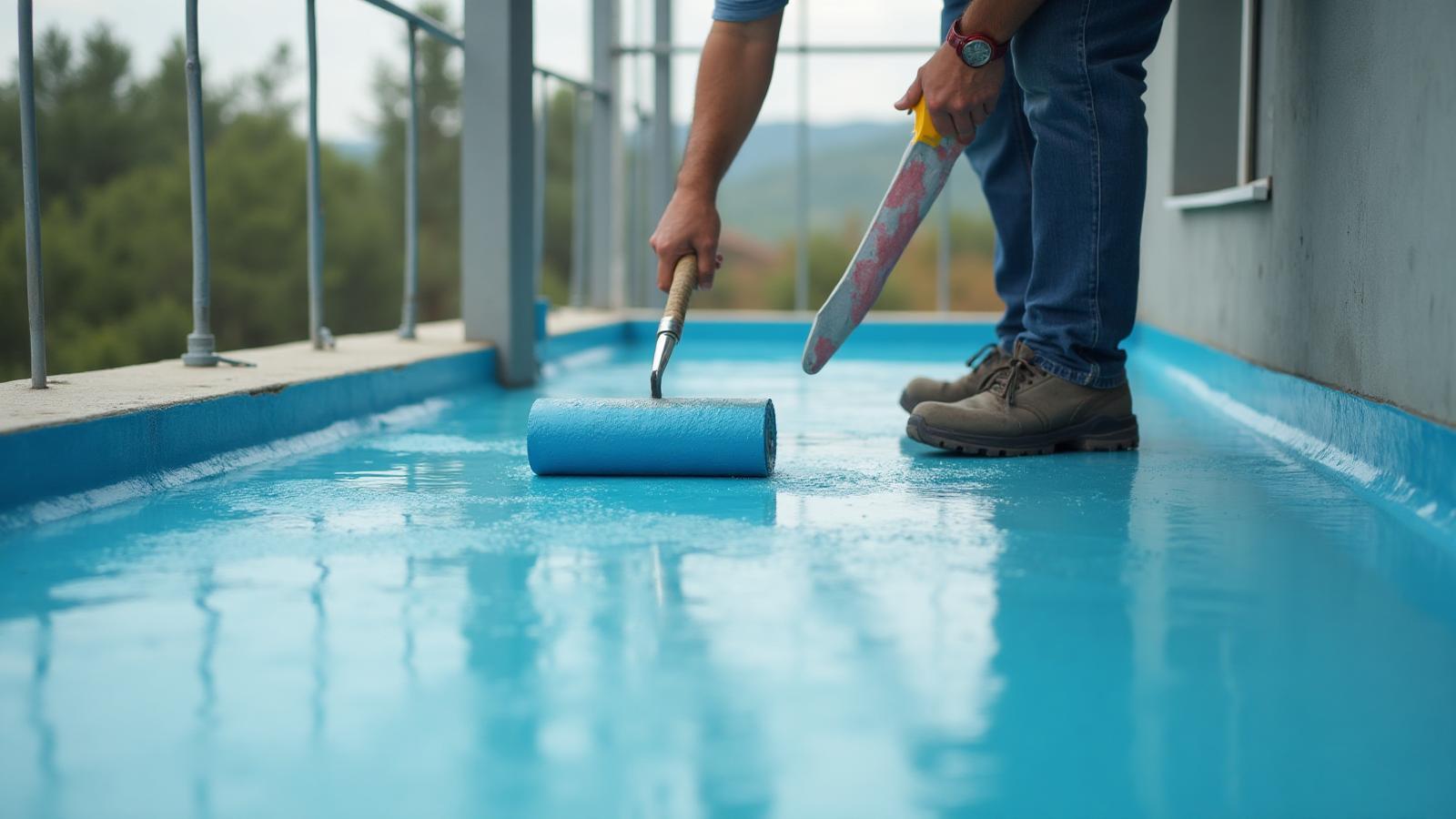
Liquid-applied membranes are the most versatile and widely used balcony waterproofing systems in residential construction. They are painted or rolled onto the prepared substrate in multiple coats, curing to form a seamless, flexible waterproof barrier.
Polyurethane Liquid Membranes
The premium choice for exposed balconies. Polyurethane membranes offer exceptional UV resistance, flexibility, and durability. They can bridge hairline cracks up to 2mm and accommodate building movement. Typical lifespan: 10–15 years on exposed surfaces.
Acrylic Liquid Membranes
A more affordable option suitable for covered balconies with limited UV exposure. Less flexible than polyurethane but adequate for protected situations. Typical lifespan: 8–12 years.
Epoxy-Based Liquid Membranes
Extremely hard-wearing with excellent chemical resistance. Used primarily in commercial and industrial applications where heavy foot traffic or chemical exposure is expected.
Best for: Residential balconies, irregularly shaped areas, balconies with many penetrations, and retrofit applications.
Torch-On Membrane Systems
Torch-on (or hot-applied) membranes use modified bitumen sheets that are heat-welded to the substrate using a gas torch. This creates an extremely robust, reliable waterproof layer.
Advantages:
- Highly durable — lifespan of 15–20+ years
- Consistent thickness across the entire surface
- Excellent resistance to UV, temperature extremes, and physical damage
- Self-sealing at laps and joints when heat-welded
Considerations:
- Requires skilled, licensed applicators
- Open flame required — not suitable for all environments
- Less flexible than polyurethane for complex shapes
- Higher installation cost but lower lifecycle cost
Best for: Large strata balconies, commercial terraces, podium decks, and high-traffic areas.
Sheet Membrane Systems
Pre-formed sheet membranes are manufactured with consistent thickness and properties. They are adhered to the substrate using adhesives or mechanical fixings.
Advantages: Guaranteed consistent thickness, factory-controlled quality, fast installation over large areas.
Considerations: Joints and laps require careful treatment, less adaptable to complex geometries, and more difficult to apply around penetrations.
Best for: Large, regular-shaped balconies and terraces in new construction.
System Comparison: Performance in Sydney Conditions
Here's how each system performs against Sydney's specific environmental challenges:
| Performance Factor | Liquid Polyurethane | Torch-On Bitumen | Sheet Membrane |
|---|---|---|---|
| UV Resistance | Excellent | Good (requires protection layer) | Moderate |
| Flexibility | Excellent (bridges cracks to 2mm) | Good | Moderate |
| Durability | Very Good (10–15 yrs) | Excellent (15–20+ yrs) | Good (10–15 yrs) |
| Ease of Repair | Easy — patch with same material | Moderate — requires heat tools | Difficult — requires sheet replacement |
| Complex Shapes | Excellent — conforms to any geometry | Moderate | Poor — difficult at corners/penetrations |
| Salt Air Resistance | Excellent | Excellent | Good |
| Typical Cost ($/m²) | $80–$120 | $100–$150 | $70–$100 |
For coastal Sydney properties in suburbs like Cronulla, Manly, and Bondi, UV resistance and salt air performance are critical selection criteria. Inland properties in Parramatta or Blacktown may prioritise cost-effectiveness.
Drainage: The Often-Overlooked Component
No waterproofing system can compensate for poor drainage. Proper drainage design is essential for every balcony:
Falls: Industry standards require a minimum fall of 1:60 (approximately 17mm per metre) directing water toward drainage outlets. Insufficient falls cause ponding, which dramatically increases hydrostatic pressure on the membrane and accelerates deterioration.
Drainage outlets: Every balcony must have adequate drainage outlets sized and positioned to handle peak rainfall. In Sydney, where intense storm events are common, undersized drains can cause temporary flooding that overwhelms waterproofing.
Overflow provisions: Standards require overflow provisions (such as scuppers or secondary drains) in case primary drains become blocked. This prevents water from building up to dangerous levels during heavy rain.
Under-tile drainage: Some systems incorporate a drainage mat between the membrane and screed/tile layer. This provides a secondary drainage path for any water that penetrates the tile surface, reducing hydrostatic pressure on the membrane.
When assessing your balcony's waterproofing needs, drainage should be evaluated alongside the membrane system. A new membrane over inadequate drainage will still fail.
Choosing the Right System for Your Property
Consider these factors when choosing a balcony waterproofing system:
- Exposure — fully exposed balconies need UV-resistant systems (polyurethane or torch-on)
- Size and shape — liquid membranes suit complex shapes; sheet/torch-on suit large regular areas
- Building type — strata buildings may require specific systems for insurance and compliance
- Budget — liquid membranes are generally more affordable upfront; torch-on offers better lifecycle value
- Existing condition — the state of the substrate influences which systems are suitable
- Maintenance plan — some systems require more ongoing maintenance than others
Our balcony repair specialists can assess your property and recommend the optimal system. We provide free inspections across Sydney including Cronulla, Parramatta, and Chatswood. Read our complete guide to leak repairs for more detailed information.
Common Mistakes to Avoid in Balcony Waterproofing
Having repaired thousands of failed balcony waterproofing systems across Sydney, we've identified the most common mistakes that lead to premature failure:
- Choosing the cheapest system — the lowest-cost membrane often has the shortest lifespan, resulting in higher total cost over the building's life
- Inadequate surface preparation — membranes bond only as well as the surface they're applied to. Cutting corners on preparation guarantees early failure
- Ignoring movement joints — failing to install movement joints at wall-to-slab junctions and at regular intervals allows building movement to tear the membrane
- Insufficient membrane thickness — applying too few coats or stretching material too thin compromises waterproofing performance
- Skipping the protection layer — applying tiles directly onto the membrane without a proper protection screed or mat risks mechanical damage during tiling
- Not addressing drainage — waterproofing over inadequate falls or blocked drains sets the system up for premature failure
Professional waterproofing specialists avoid these mistakes through proper training, quality materials, and adherence to Australian Standards. Don't trust your balcony to a general handyman — the cost of getting it wrong far exceeds the cost of getting it right the first time.
People Also Ask
Peter Kim
Lead Technician — Leak Repair Specialist
Over 15 years of experience in shower and balcony waterproofing solutions across Greater Sydney.